What was it about?
In March 2024, I started a project that I called “Adding Colours to the Crayon Box”. The idea was to attempt to develop a creative computing culture at a school by inviting a group of junior (grades 5 and 6) students to work with micro:bits and various other materials, guided by the book “Invent to Learn – Guide to the MicroBit“.
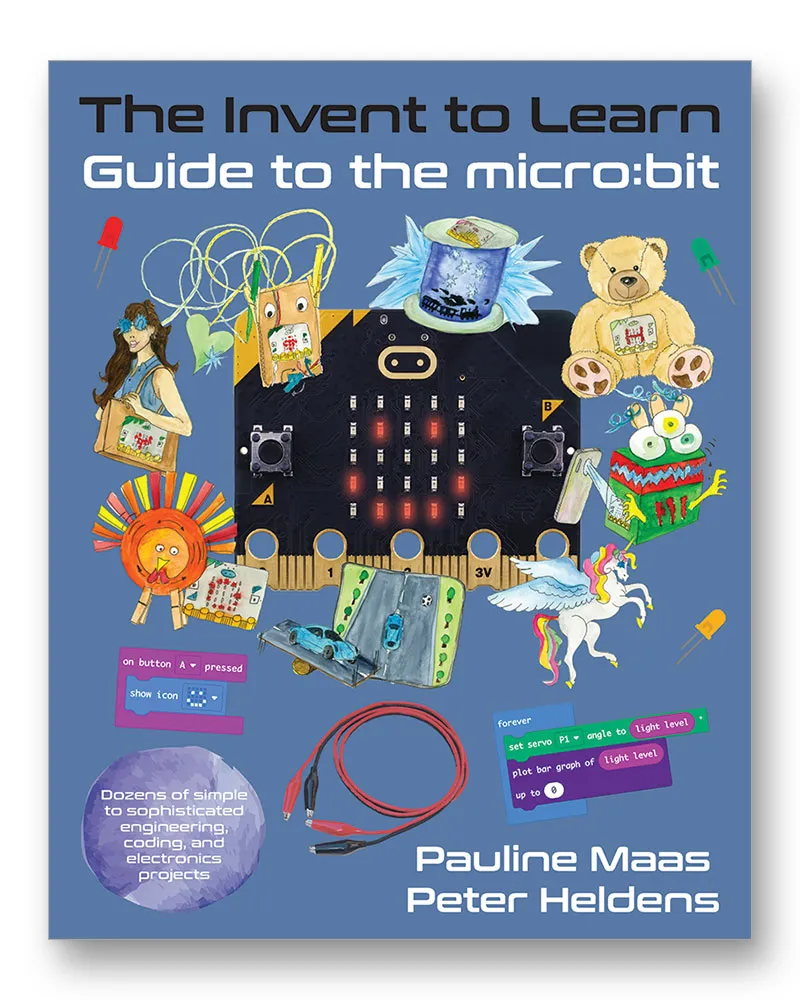
As it says on the back, this book “combines coding, craft, and creativity to teach physical computing, engineering, computer science, and electronics to young people”. By adding computing and sensors and motors and lights to their projects, students will be able to add new levels of complexity to their creative designs.
Who was involved?
Participants (20) were selected by their teachers as students who might be interested in and benefit from this type of initiative. I had asked for this with the idea that the teachers know which students might benefit the most, as well as who could function somewhat independently.
Parents were also asked for their support and gave it (see documents at end).
Planned Goals
A planned goal was to collectively complete all of the projects (or extensions of them) in the book at least once (there are around 30 or so), as well as add many new ones. Students would choose only projects they were interested in, and a key group would be formed to take on leading tasks (documentation, communications, materials coordination). Projects would be celebrated (not evaluated) during Education Week (first week of May) – as well as being on display throughout the school and demonstrated on a regular basis. Parents were to be encouraged to be active participants as well.
If this were a club, it would be called the “Adding Colours to the Crayon Box” club. But it was not a club, it was more an initiative – and it is not about the micro:bit – it was about developing a culture that welcomes and includes things like micro:bits. This culture should exist over all time (i.e. throughout the day and beyond) and beyond the walls of the school (i.e. at home and in the community). Students and possibly their families were to begin to develop a fluency with new materials to let them express themselves in new creative ways. This was a primary goal.
Materials
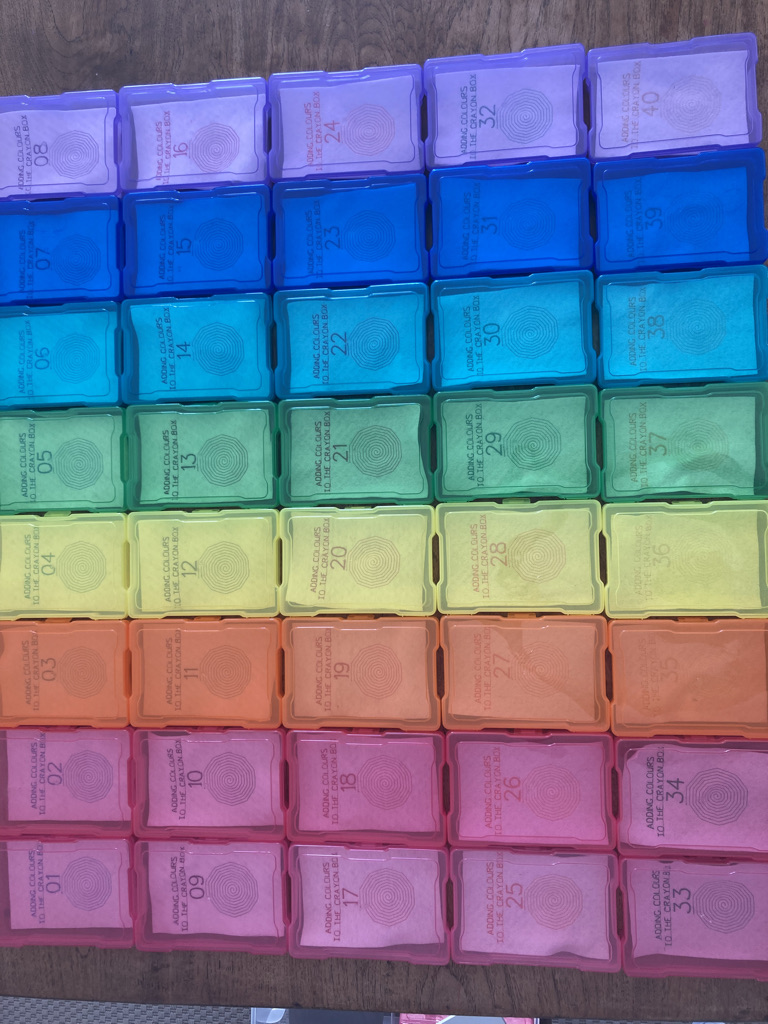
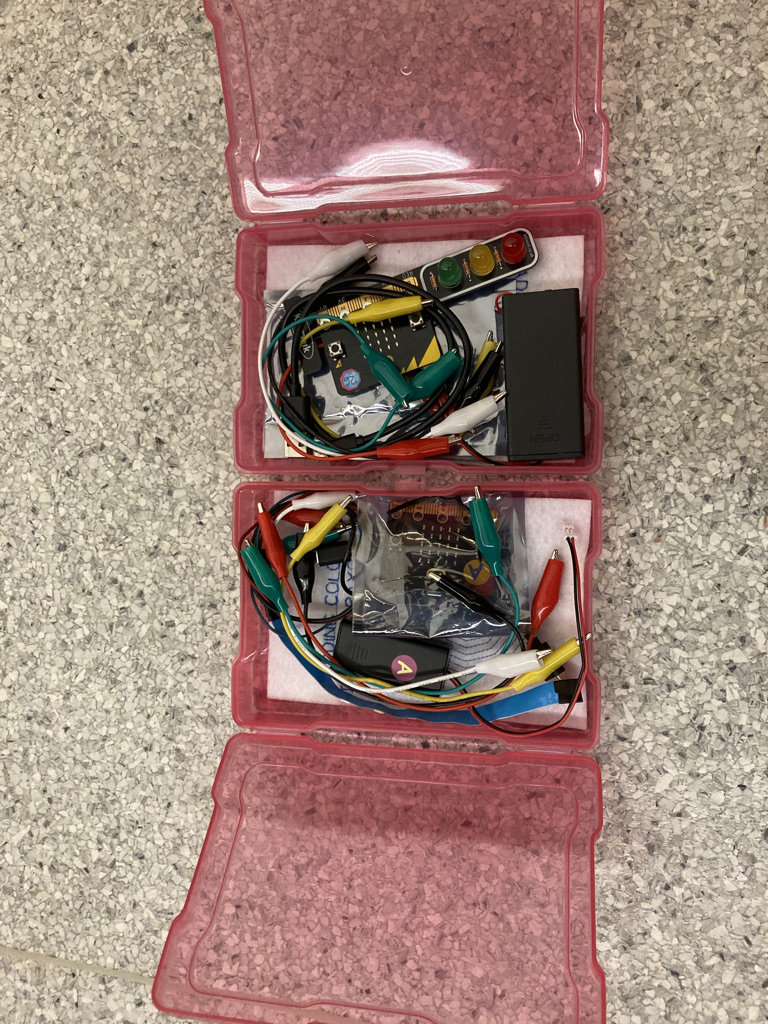
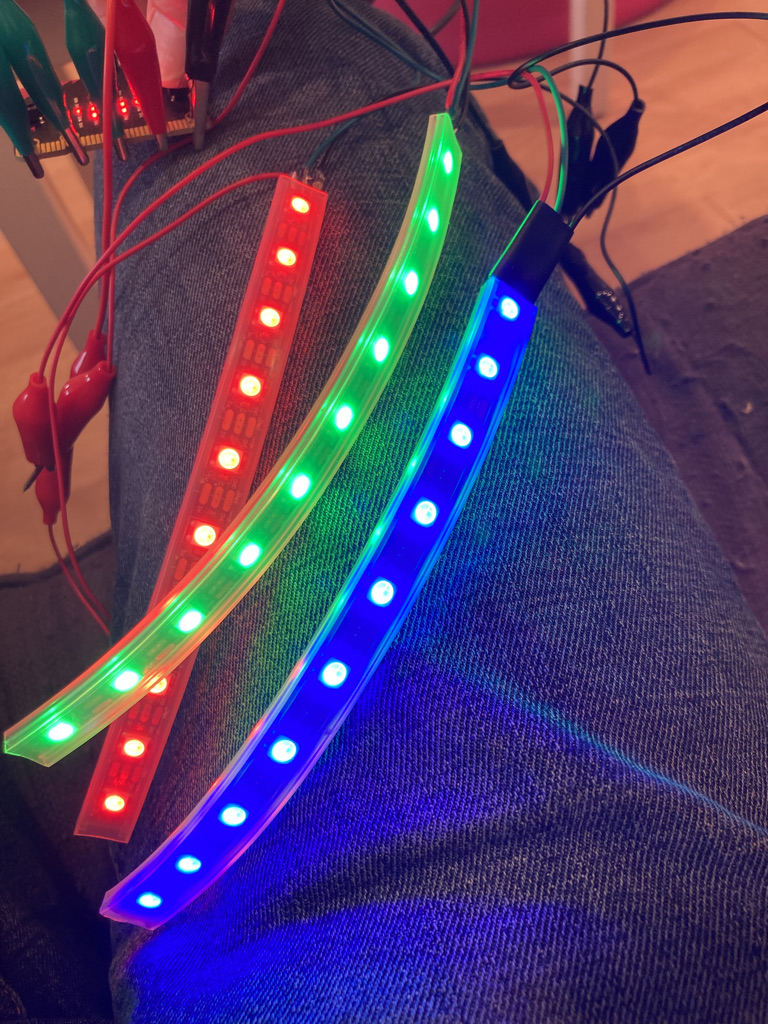
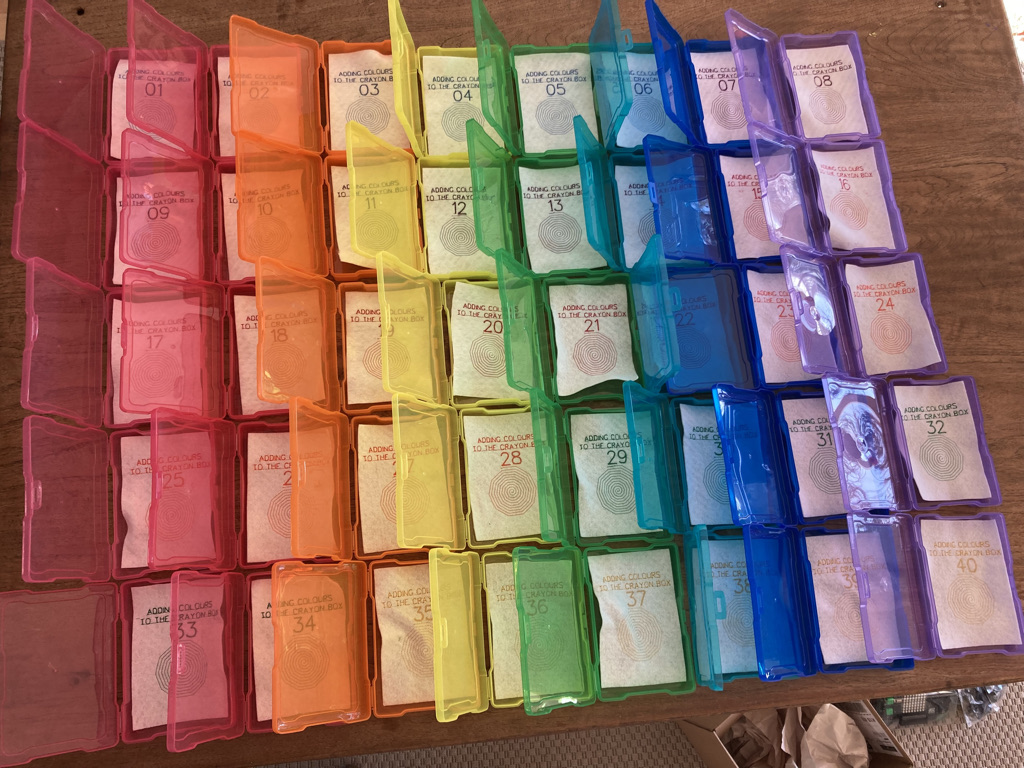
Each student received two micro:bit kits (including LED strips, Kitronik traffic light LED, alligator clip leads) and a copy of the book to be used for the duration of the project, which went from March until June.
When did this all happen?
Students were encouraged to use their kits at home, as well as at school. Materials required for various projects were supplied at school, and some found or supplied from home. Many projects used recycled materials, as sustainability was a focus for designs. Student projects could have included family members and community members, and some engaged their classmates and lower grade level “buddies”. The idea was that they could take these everywhere and use them whenever they wanted to.
My Involvement
I went to the school on Tuesday and Thursday afternoons, from 12-3, and resided in the school’s makerspace room and wherever else needed. Students could bring their projects to school those days and spend some time on them as needed, as well as be able to meet with others for advice and support and sharing.
How did it go?
A planned first goal was to collectively complete all of the projects in the book at least once (there are around 30 or so, starting with Warm Ups and ending with Super Duper), as well as adding many new ones. We got off to a good start, but ended up not getting all projects tried, even though there were ways to keep track of projects attempted (sign a wall chart or complete a Google form in the Google Classroom created exclusively for this project )
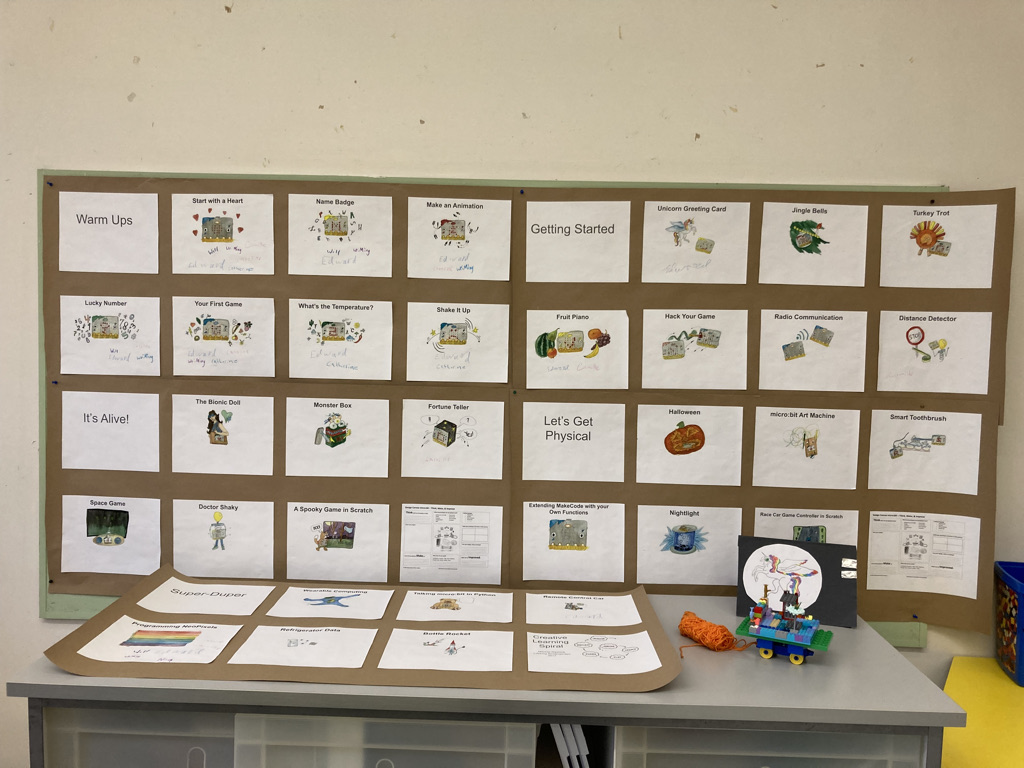
Students were to choose only projects they were interested in. This worked well for some, but others had difficulty when given the opportunity to choose – they were too used to being told what to do.
During the Tuesdays and Thursdays that I was at the school, what actually happened was students mostly only came during their recess time, from 2-2:45, even though I was there much longer. It was hard to break them free from the school schedule. Plus some had drama club on Tuesdays which took priority (it started a few weeks after this initiative began).
I had hoped that some students would take on leading roles in documentation, communications, and materials coordination. Unfortunately, this did not happen. One reason was that the students I thought would rise to this opportunity were also very busy in other areas of life (drama club, home activities) and could not make time for more. I even had a couple leave the project due to the stresses of having too many activities in their lives.
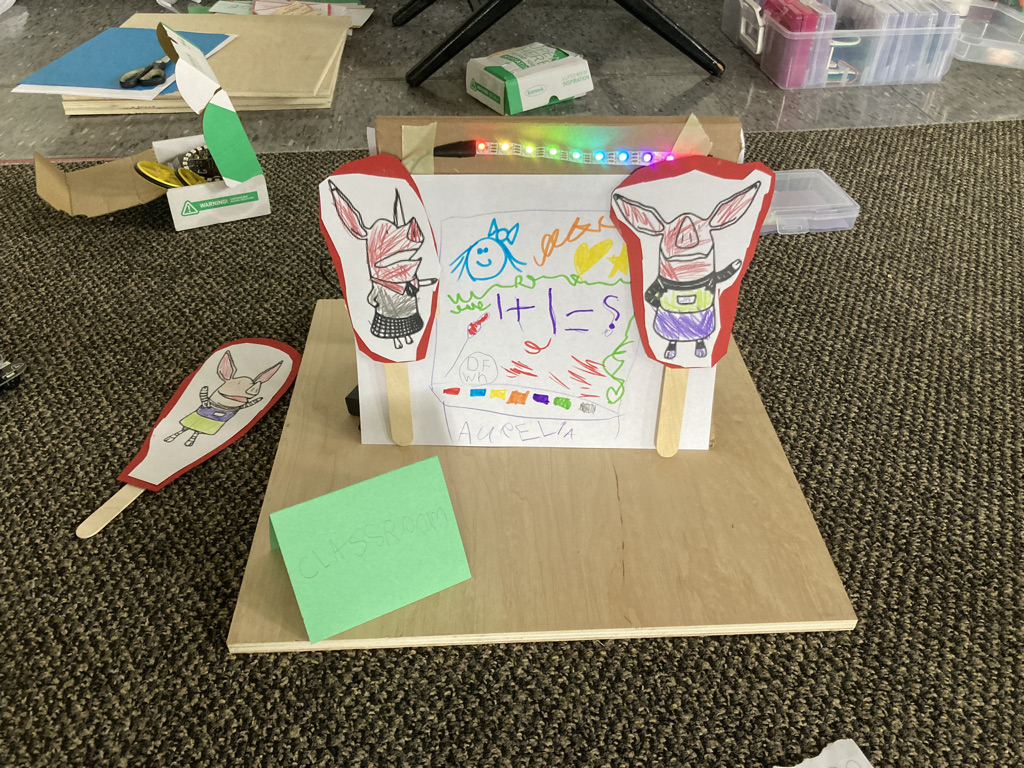
This was a classroom scene built by grade 1 students and lit by older ones.
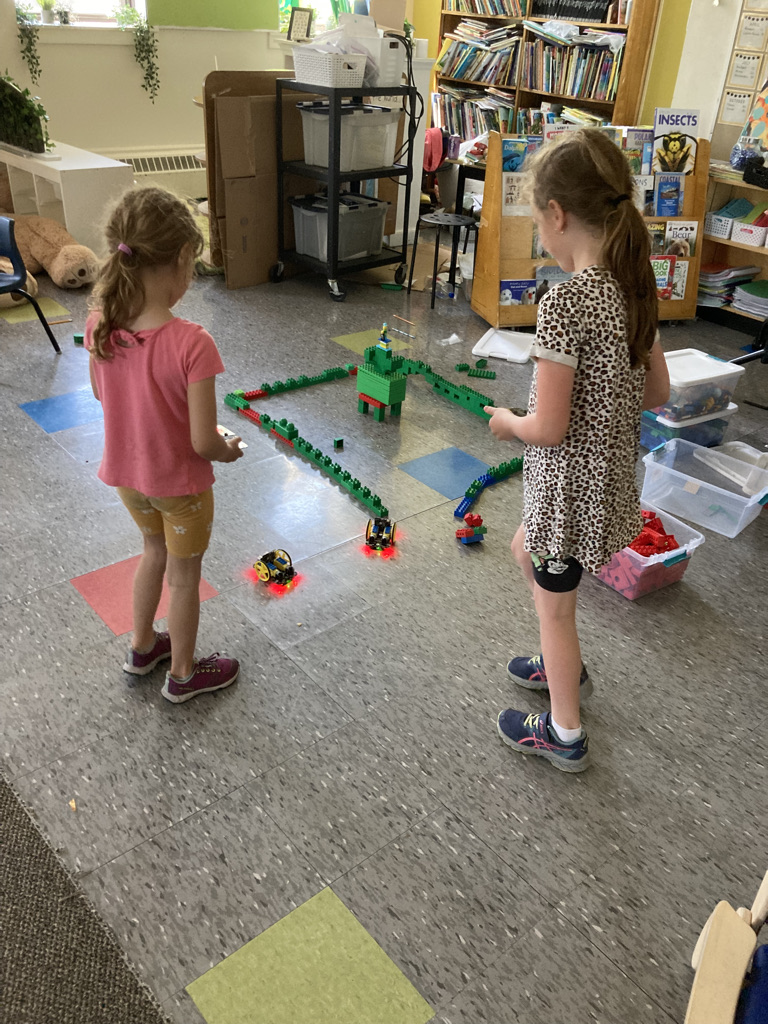
Young students using micro:bit controllers to drive around micro:bit controlled buggies into their built space. Programming done by older students.
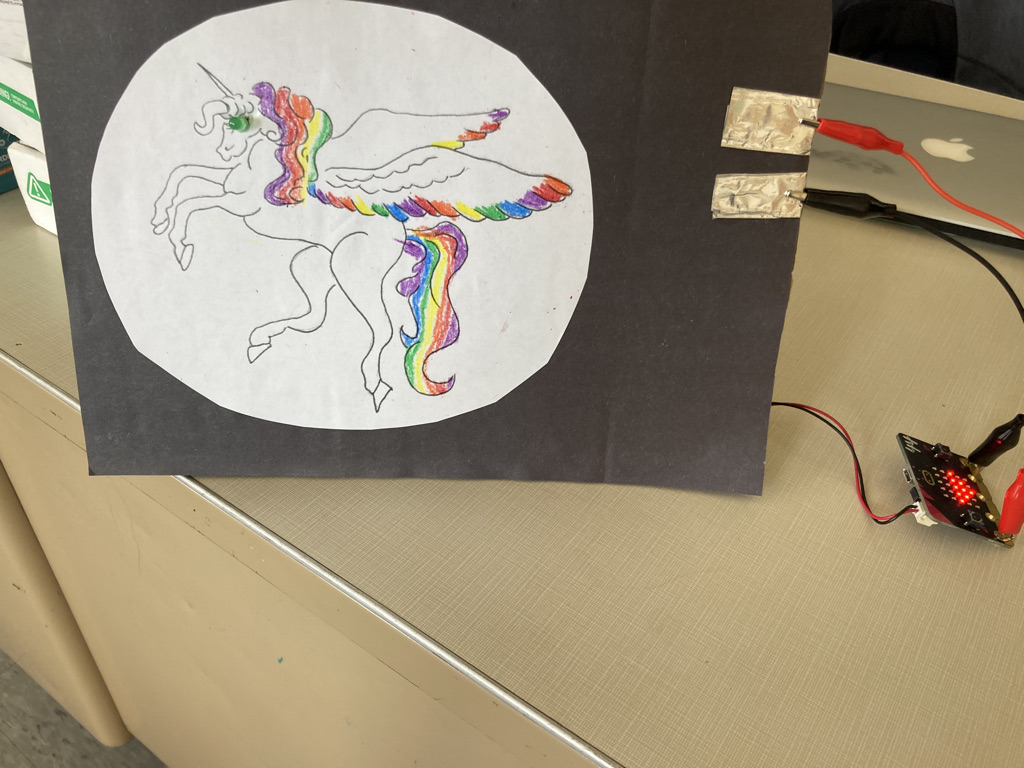
The Unicorn Greeting Card project. Simply light an LED, and play the happy birthday song.
Projects were celebrated while in progress, by being displayed for others to see and being discussed as they were worked on. I had hoped that parents and other family members would be active participants, but as just stated, many students found their lives too busy to add more activities.
Success??
A core group of students did clearly develop much greater fluency with physical computing – their confidence in being able to create increased, and they were willing and eager to take on unfamiliar tasks. This is a good thing and in the direction I had hoped for for the students. These students helped out in the Studio Project – they were essential contributors to that project. I just wish more could have made it to this point.
What’s next?
This initiative was about developing a creative computing culture – helping students and their families develop a fluency with new materials to let them express themselves in new creative ways. Some, but not as many as I had hoped, were able to move in this direction.
A modified and different approach needs to be taken to gain traction. Next versions will do this…I am thinking about a community/family version next. I need parents to actually be involved. I tried this out recently with three families. More to come…
Another thought is to loan out the materials to a school/class that would like to try the initiative with their students. Part of the difficulty with my first attempt is that I was not always in the building to encourage and give face-to-face advice and support.
Additional Resources
Here are some of the documents I created before the project started. The initial proposal went to the school principal (including a ChatGPT generated version (for fun!)).
Once the project was approved, I gave the details to the teachers whose students would be involved.
The next document is the letter sent home with each student and returned signed by both student and parents.